Table of Content
In this case, an adapter tee above the shut-off valve can be used to provide a source of water for the filter system. Weak pressure is either a storage problem or a production problem. To determine which close the tank valve and open the RO faucet. After a brief burst, you should see a steady thin trickle of water, or -if you have the permeate pump--a trickle that pulses on and off. If this is what you see, then it's a storage tank problem. If you see zero water, or only a few broken drops then it's a production problem.
He started his own residential service and repair plumbing business. Aaron's articles about plumbing on The Spruce span four years. They’re used heavily in the restaurant, hotel, and brewery industries.
Undersink RO Replacement Filters
You may share the water report with us, if you would like a personal recommendation. The average person spends about $1,500 on bottled water in a year. A few factors that affect a system's cost include its efficiency, the number of stages, and if it has an NSF certification. Find hiring guides, material costs, expert advice, how-to's and more. Use your thumb and forefinger to push down the collet ring while also pulling the tubing. Trim ¼” from the tubing’s end, and make sure it is smooth and rounded.
Also, a light/ empty tank may indicate a production problem, and a heavy/full tank a tank problem. Another thing to take note of is that each RO system uses a catalytic carbon filtration media inside of the carbon pre-filter. This treats chloramine, which is commonly found in municipally-treated water.
Home Master TMULTRA-ERP
A reverse osmosis system will last for decades if properly maintained, filters replaced, and worn parts replaced. Most filters must be replaced every six to five years, depending on the stage. The reverse osmosis membrane lasts two to five years, while the recharge stage and carbon filters might need replacing yearly. A whole-house reverse osmosis system is necessary for some water conditions, most often found with well water and some rural water supplies. You may also want a whole-house system to combat hard water or remove water softening salts.

You may also need to buy additional tubing to connect the components. Reverse osmosis systems can last for decades with the right care and maintenance. You’ll need to check it yearly for leaks, replace hoses and gaskets as needed, and replace filters according to the filter replacement chart that comes with your system.
Average Cost of a Reverse Osmosis Water System
The ISetTMA8 will need to be replaced annually, and the membranes should be replaced every 3-5 years. Install the filter's sink-top spigot first so you can get the lines down under the countertop before it gets too crowded beneath the sink. Mount the RO spigot to the kitchen sink deck or countertop with the hardware provided. Many sinks will have an existing knock-out opening that can be used for the spigot. Sometimes the knockout intended for a sink sprayer can be used for the filter's spigot.

Both the TMHP Hydroperfection and the TMHP-L models come pre-assembled for your convenience. Let’s take a look at what exactly you will receive in the box. At High Water Standard, our team of experts can do the hard work for you. We have over 15 years of experience serving residents of NYC, North New Jersey, and Long Island. High Water Standard can also provide you with insurance and an extended warranty for your Home Master RO system.
Home Master TMHP-L
Commercial reverse osmosis systems require high flow rates and storage capacities, so you’ll never use a residential system in almost any business setting. Commercial or large reverse osmosis systems cost around $4,000 to $25,000, not including installation, which can range from $500 to $2,000 or more. One minor repair issue you may run into with the TM and its TM ERP-L counterpart is fine air bubbles. Air is trapped inside the pores of the carbon and is gradually released. All you have to do is wait a few seconds for the water to clear after you’ve poured a glass of water. The TM is one of Home Master’s most basic filtration systems, making it an excellent option for households on a budget.

However, one brand's seven-stage filter might cost less than another brand's three-stage system. Installing a single-tap or point-of-use RO system costs around $150 to $1,300. These systems get installed under sinks, behind refrigerators, and near washing machines, depending on where you need them. We not only install but also service and repair all of the above systems,even if your filter was installed by another company.
The systems use built-in filter housing, which lets you make easy filter changes on an annual basis. Due to the Fast Flow RO kit that’s included in each system, you can essentially double the flow rate of a standard RO system. Air valve is located on the side of the tank under a cap. If the pressure is less or if tank is heavy with water, then add air using a bicycle pump (not a compressor.) Please add 3 pumps, then pause, repeat. Allow 20 minutes to pump out water and repressurize tank. However, few systems actually deliver pure water without compromises.

Flush & Drain water center, dump at least 2 batches of ice, dispose of foods/leftovers/condiments that are out of code, sanitize shelves and all surfaces. The Home Master RO may be installed under a sink, or in a basement within 10' feet of the. A National Sanitation Foundation certification isn't required, but it often increases the filter price. However, NSF certifications are relatively easy to get, so be wary of any unit that doesn't have one. A whole-house system is great for homes with hard water, a water softener, or high chlorine levels. It’s also beneficial for homeowners who use well water or rainwater for their water consumption.
Pull off the first filter that you will be replacing (it’s best to work with one filter at a time). If you still aren’t sure which kind best meets your needs, give a call to High Water Standard specialists. We have over a decade of experience, and we would be happy to provide a consultation for residents of North New Jersey, NYC, or Long Island.

Make sure the tubing is cut is straight, the edge is completely smooth, and the tube is rounded. Scratched, gouged, damaged, or oblong tubing end will leak. Push tubing all the way in, then pull back gently, to check fit.
Leave the RO faucet in the open position until the water stops flowing completely. Then open the feed valve, close the RO faucet and allow the system to refill. RO faucet at the sink to relieve any system pressure. The average reverse osmosis system costs about $400 per year, including filters. Labor costs to install a reverse osmosis filter system runs $300 to $700 on average. Complex installs or those with minimal space or accessibility issues might reach $1,500.
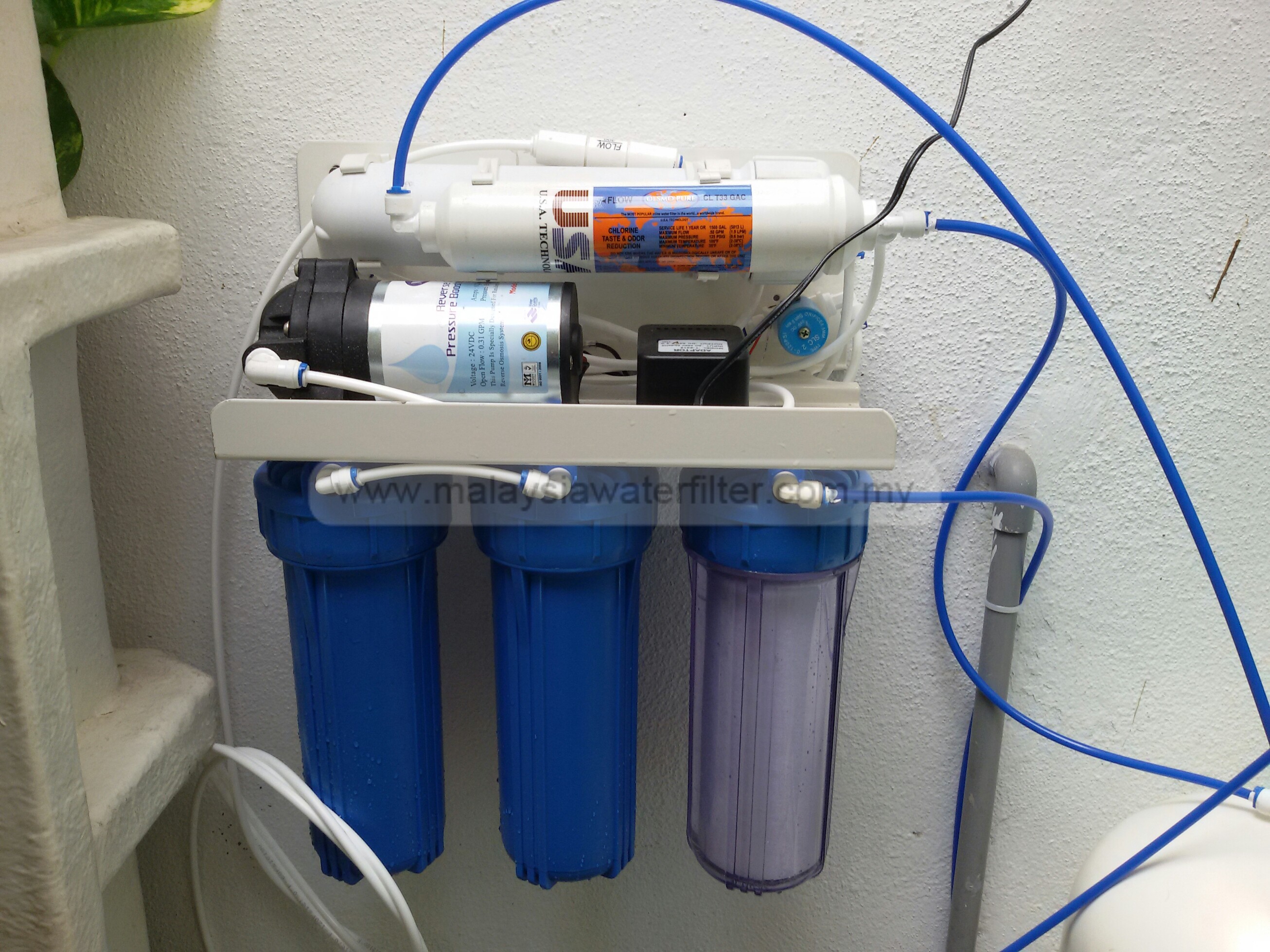
Most push-pull fittings take about a 1/3" of tubing inserted into them. If your drinking water is contaminated with dangerous chemicals, you are unintentionally harming every organ, tissue, and bone in your body. Insert the tube approximately ¼” into the replacement filter. Repeat for the other end of the filter & then do the same process for each of the remaining replacement filters. For more complete directions, be sure to check the manual that comes with your Home Master water system. If you happen to lose your copy, you can find a virtual version on the Home Master reverse osmosis website.


No comments:
Post a Comment